Pastors are meant to be spiritual guides, community builders, and voices of encouragement. For centuries, people have turned to their pastors for wisdom, prayer, and support during life’s most difficult seasons. But while many shepherds live with integrity and humility, some use their influence in unhealthy—even destructive—ways. A dangerous pastor doesn’t always appear harmful at first. In fact, many start out looking highly charismatic, passionate, and deeply committed. Over time, however, patterns emerge that reveal manipulation, control, or abuse of authority.
Recognizing these warning signs is vital. Communities can fall apart when toxic leadership goes unchecked. Families can be spiritually wounded for years. And individuals may carry the scars of religious trauma long after leaving such environments. This is not about nitpicking flaws—every leader has imperfections—but about identifying serious behaviors that indicate a pastor is leading people away from health, safety, and truth.
In this article, we’ll break down five signs of a dangerous pastor. You’ll see how these behaviors play out in real life, why they cause lasting harm, and what steps you can take if you recognize them in your church.
Why Is It Important to Spot a Dangerous Pastor?
People often ask, “Why can’t we just let pastors be human and imperfect?” That’s true—no one expects perfection. But the role of a pastor carries unique influence. Their words shape marriages, guide finances, impact career decisions, and even influence mental health. When a leader misuses that power, the damage runs deeper than a bad sermon or a poor administrative choice.
In many African, Latin American, and even Western communities, pastors are treated as cultural elders. In rural areas, their authority may extend beyond the church into politics, land disputes, and education. This makes discernment even more critical. A dangerous pastor can sway entire communities into fear, division, or blind loyalty.
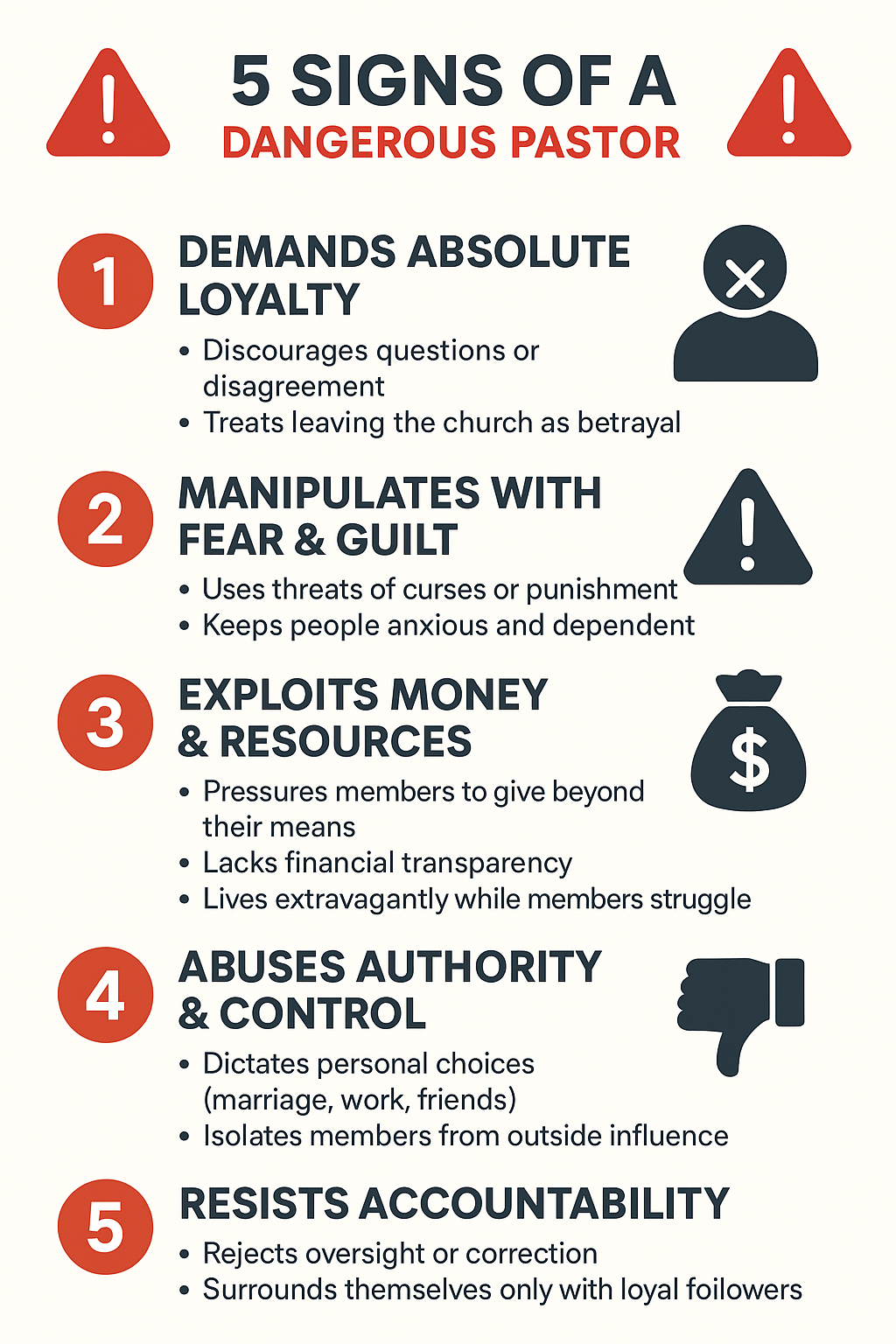
1. They Demand Absolute Loyalty
One of the clearest signs of a dangerous pastor is the demand for unquestioned loyalty.
Healthy pastors encourage trust but also welcome dialogue and accountability. Dangerous pastors, however, often teach that disagreement is rebellion against God. They may say things like, “If you leave this church, you’re stepping out of God’s will.”
Red flags include:
- Discouraging members from visiting other churches.
- Treating those who leave as traitors or enemies.
- Using guilt or fear to keep people dependent on their ministry.
Real-life scenario:
In a small-town congregation, a pastor once told members that if they questioned his decisions, they were “touching the anointed.” This silenced any healthy feedback. Over time, the church became more like a personality cult than a spiritual community.
Takeaway: Loyalty should be given freely out of love, not demanded through fear. If questioning leadership feels forbidden, that’s a major sign of danger.
2. They Manipulate With Fear and Guilt
Fear is a powerful tool, and many toxic pastors use it to maintain control. They may preach constantly about curses, demons, or divine punishment for those who disobey them. Instead of pointing people toward hope and redemption, they keep them anxious and dependent.
Common tactics include:
- Preaching doom over those who leave the church.
- Claiming to have special prophetic insight that cannot be challenged.
- Using guilt trips—“If you really loved God, you’d give more or serve more.”
Cultural context:
In some regions, pastors blend cultural beliefs in curses or ancestral spirits with religious fear. This can keep people trapped, believing that leaving the pastor’s covering will invite disaster into their lives.
Takeaway: A pastor should inspire spiritual growth, not cultivate constant anxiety. When guilt and fear become the primary motivators, the environment has turned toxic.
3. They Exploit Money and Resources
Finances are often where dangerous pastors reveal their true motives. While it’s normal for churches to receive tithes and offerings, manipulative leaders go further, exploiting members for personal gain.
Warning signs include:
- Pressuring members to give beyond their means.
- Lack of financial transparency.
- The pastor living extravagantly while members struggle in poverty.
Case study:
In one city church, the pastor insisted that members sow “sacrificial seeds” for every life milestone—birthdays, new jobs, even funerals. Meanwhile, he drove luxury cars and lived in a mansion paid for by congregants. Eventually, disillusioned members left after realizing the financial abuse.
Expert perspective:
Financial accountability is a basic principle in healthy organizations. Pastors who resist oversight or grow defensive when asked about church funds often have something to hide.
Takeaway: Money should fuel ministry, not personal empires. When generosity becomes exploitation, it’s a dangerous sign.
4. They Abuse Authority and Control Personal Lives
Some pastors go far beyond guiding spiritual matters and begin micromanaging personal lives. They dictate who members can marry, what jobs they should take, or even how they should dress.
Examples of overreach include:
- Telling people which friends or family to avoid.
- Making every decision seem subject to “pastoral approval.”
- Isolating members from outside influences to tighten control.
A young woman once shared how her pastor discouraged her from pursuing university studies, claiming education would make her “rebellious.” She later realized the pastor was simply afraid of losing influence over her life decisions.
In communities where pastors hold elder-like status, this kind of control may be harder to spot. People often see it as normal respect rather than manipulation. Still, when personal freedom is stifled, danger is present.
Takeaway: A pastor’s role is to guide, not dominate. If your life decisions feel controlled rather than supported, you may be under unhealthy leadership.
5. They Show No Accountability
Accountability is the safeguard of healthy leadership. Dangerous pastors, however, often resist it fiercely. They may operate without a board, dismiss elders who challenge them, or create systems where no one can correct them.
Red flags include:
- Refusing external oversight.
- Surrounding themselves only with loyalists.
- Reacting defensively to correction.
Case study:
A congregation once watched as their pastor fired every board member who questioned his spending. Without accountability, his leadership grew increasingly abusive, and the church eventually collapsed.
Even the best leaders need mentors, peers, and systems of accountability. A pastor who insists they are “only accountable to God” is often paving the way for unchecked abuse.
Takeaway: A pastor without accountability is a pastor who can easily drift into harm.
What Happens If You Stay Under a Dangerous Pastor?
People often remain in harmful churches because they fear leaving. But staying under toxic leadership has consequences:
- Spiritual burnout: Constant fear and guilt drain faith rather than nurture it.
- Emotional harm: Manipulation can lead to shame, anxiety, and loss of self-worth.
- Community division: Families may split when some choose to leave while others stay.
- Financial loss: Exploitation can damage long-term financial stability.
Over time, the damage can take years to heal. Many ex-members describe needing counseling, new community support, and time to rebuild trust in healthy spiritual environments.
How Do You Confront or Leave a Dangerous Pastor?
Leaving isn’t always easy, especially if you’ve invested years in a church. But protecting your well-being is vital.
Steps you can take:
- Seek outside perspective. Talk to trusted friends, mentors, or leaders outside the church.
- Document patterns. Keeping notes of behaviors can help you process clearly.
- Set boundaries. You don’t owe long explanations if leadership is manipulative.
- Transition carefully. Find a healthier church or supportive community as you leave.
- Focus on healing. Give yourself permission to recover and rebuild trust.
Can a Dangerous Pastor Change?
Yes, but only if they genuinely embrace accountability and repentance. History shows that some leaders, once confronted, step down and seek restoration. Others double down in defensiveness. Change requires humility, external guidance, and willingness to release unhealthy control. Without those, the pattern usually repeats.
Final Thoughts
Recognizing the signs of a dangerous pastor is not about being suspicious of every leader. It’s about discernment. A pastor’s role should bring life, peace, and guidance—not fear, guilt, or exploitation.
If you see these signs—demanding loyalty, manipulating with fear, exploiting money, abusing authority, and resisting accountability—it’s worth pausing and asking hard questions. Your faith journey should not be marked by control and harm but by freedom and growth.
Communities thrive when leaders are humble, transparent, and servant-hearted. Protecting yourself and your loved ones from dangerous leadership ensures that faith remains a source of hope, not bondage.